Jemma Pinueva in conversation with Paolina Russo and Lucile Guilmard
A Studio Visit with Paolina Russo and Lucile Guilmard

There is something about Paolina Russo that makes you want to be part of the gang. Canadian-born, half Filipina and half Italian, Russo grew up in Markham, Ontario, while her French co-founder Lucile Guilmard was raised in Fouras, a small seaside town on France’s Atlantic coast. Their London-based label draws on the things they grew up with far away from fashion capitals: arts and crafts, local sports, video games, music and the particular kind of imagination that comes from having to make your own fun.
I met Paolina and Lucile twice in Copenhagen, where the city’s fashion week was celebrating its 20th season, in the lead-up to their Spring Summer 2027 show. The first time was the day before, when I spent a couple of hours hanging around with their team as they worked through final fittings and casting calls. There were snacks everywhere, people disappearing for smoke breaks and conversations carrying across the room. Paolina’s mother was there too, dressed wonderfully, in colour. Paolina and Lucile themselves were mostly caught up in calls and preparations, but for the day before a fashion show, there was surprisingly little ceremony around any of it. It just felt like being at someone’s home.
Later the next day, I saw them again at Nørrebrohallen, the massive sports complex where they were preparing for the evening. By showtime, the space had filled with hundreds of people. Grace Ives, who went to school with Paolina, and Copenhagen band Haloplus+ played opposite each other in a battle of the bands as models and skateboarders moved through the space. The show opened beyond the usual fashion-week crowd and was followed by a concert open to everyone.
Only afterwards did I realise how closely the evening mirrored the story behind the collection. Lone Star begins with a girl spending the summer at her grandmother’s house, surrounded by sewing, quilts and the quiet rituals of home, before the world outside begins to pull her elsewhere. It is a fantasy, but one rooted in the designers’ own memories of growing up.
Watching it all unfold in Copenhagen, it felt like the kind of world a small-town girl might once have imagined for herself: you find your people, make something together and, one day, get to invite everyone in.
‘We’re always looking for a feeling and a sense of belonging. The clothes we make are a uniform for belonging.’
Lucile Guilmard


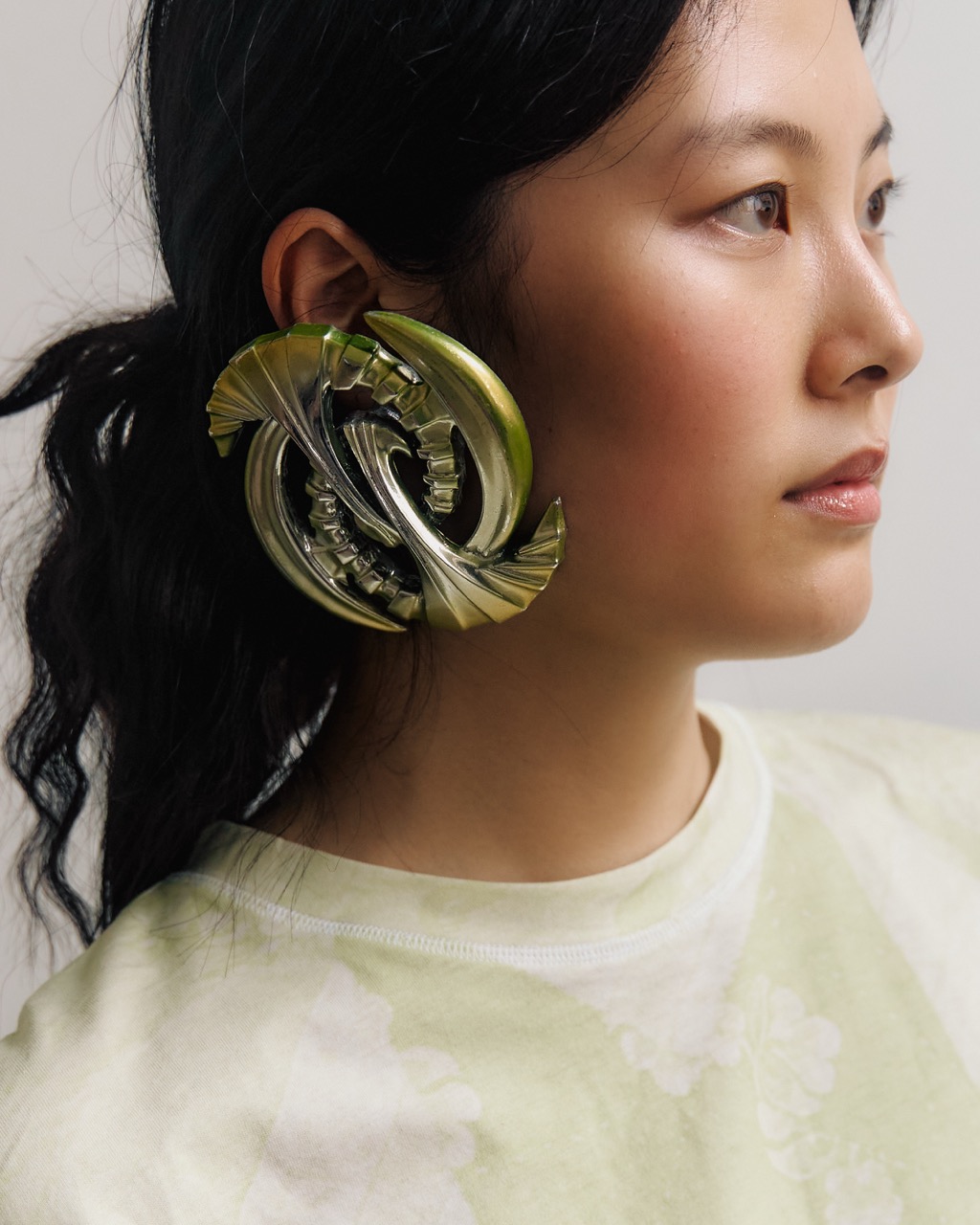

Jemma Pinueva: How are you feeling ahead of the show?
Lucile Guilmard: We’re so excited. I think we got rid of all the stress a few days ago. We’re peaceful, happy and ready to do it.
Paolina Russo: Everything is done. Anything that happens now is a surprise, and it will be a happy surprise no matter what.
JP: Were you stressed a few days ago?
PR: Actually, no. The collection has been done for a month and a half. We finished it for sales when we saw you back in June. In previous seasons, the timing was always so tight: we would do the showroom and go straight into the show. Everything happened so quickly that we didn’t really get to absorb it. This season, we’ve had time to digest and understand the collection, and refine things.
LG: We’re also surrounded by the best people in our team, who keep everything under control. A lot of them are in the room with us — Jaykay, Flo, Domin, Gerrit, Lola, Alex. It’s a group of friends making this together, so it honestly feels stress-free.
JP: There’s a closeness within your team that feels quite rare. What do you think creates that?
PR: We’re friends with everyone we work with. Either they were our friends before or we became friends through working together. It’s almost an unspoken rule. We spend so much time together, and the nature of the job can be very stressful. It becomes less stressful when you’re doing it with your friends. You create a shared experience that you can laugh about together. It would probably feel much lonelier and scarier if we were doing it alone.
LG: And the quality of the work is better when everybody feels involved. You ask people for their opinions and how they’re feeling. All of that is important, and I think you can see it in the work. The energy fuses through it.
JP: What about between the two of you? Do you disagree often?
LG: We agree and disagree all the time. But we understand that our disagreements are just different opinions. We acknowledge that, and then it becomes a productive conversation.
PR: The weird thing is what we do agree on. Sometimes we don’t even speak to each other and then we’ll show up wearing the same outfit, or independently arrive at exactly the same conclusion.
JP: Is that because you spend so much time together, or were you naturally similar to begin with?
LG: We’re actually very different, but there’s a similar core to our taste and the way we like to do things. That’s why we started working together.
PR: We’re most similar in our principles, and those principles influence how we make decisions for the brand. Even when you say that our team feels welcoming, that comes from the values we share around caring for people, the human experience, and how we spend our time and love.
LG: I find it enriching that we don’t agree on everything. We need to challenge each other. The reason we do this together is because we want each other’s perspective rather than working alone.
JP: You come from quite different backgrounds, yet you’ve developed this shared taste. Where do you think that comes from?
LG: I think it has something to do with the feeling of home. At home, you nurture the people around you and care for them. That’s how we treat the studio.
PR: We both have very strong connections to home, our upbringing and our families. We’re also both older sisters, so there’s a lot of older-sister energy. We grew up in smaller towns, in environments where our families instilled a strong sense of community and shared values in us. We also both had huge imaginations growing up. We expressed them through arts and crafts, make-believe and creating fantasy out of nothing. In small towns, you don’t necessarily have that many resources, so you use whatever is around you to build your own world. I think that shared kind of imagination influenced both of us.
LG: We also share the experience of being a little bit bullied at school. I remember turning up in my outfits thinking they were completely normal, and people would take pictures of me and post them online saying: ‘Oh, another day at the circus.’
PR: My mom really encouraged me to be myself. She would take me to thrift stores where I could find clothes that nobody else at school was wearing and develop my own personal style. We see that in the brand now, too. It’s cool that people really look and feel like themselves in our clothes.
JP: Did you always know you wanted to work in fashion?
PR: I think I was always interested in it, but I didn’t know it was fashion. I didn’t understand the concept of fashion as a job. I just thought I was a creative person who liked dressing up and making things. It wasn’t until I left Canada and came to London and Europe that I understood it could be a clear path. I remember watching Marc Jacobs and Dior shows on Fashion TV, but I didn’t realise that was a world I could actually enter.
LG: For me, 100 per cent. I knew from the time I was three. My dad’s brother had a maternity brand and a shop on Île d’Oléron, off the west coast of France, and his friends designed for Cirque du Soleil, so I was exposed to the idea that this could actually be a job. My dad would make my primary-school costumes on his domestic sewing machine. The first clothes I modified were my mum’s old pregnancy clothes so I could wear them. I decided very early that I was going to do it too. Fashion is a place where so many different artistic expressions can meet and where special people can inspire you. I find that very beautiful.
JP: Music seems to have become a big part of the world around Paolina Russo. Where does that come from?
PR: We use the brand as a way of doing all the things we love. Music is a really important part of it. It had a huge influence on my personal style growing up. I listened to so much indie rock and electronic music. I remember Alice Glass from Crystal Castles — her look was so strong that I cut my hair like hers. Music lets you embody a mood and a fantasy. For our Autumn Winter 2026 show, we worked with Oklou. We first started working together when we dressed her for a concert at La Cigale in Paris during the Choke Enough tour. She was pregnant at the time, wearing a pair of jeans — actually, the same ones I’m wearing today — and singing to this crowd. It was so epic.
LG: Music plays a huge part in our practice, which you’ll see tonight as well because we’re having a live performance. We’re expecting more people than the venue can hold, so the runway will be half inside and half outside, where the performance will take place.
‘The collection is about a girl who follows a lone star outside her window. She sneaks out at night to meet her skater and musician friends and go to a gig. It’s a journey of finding yourself.’
Paolina Russo
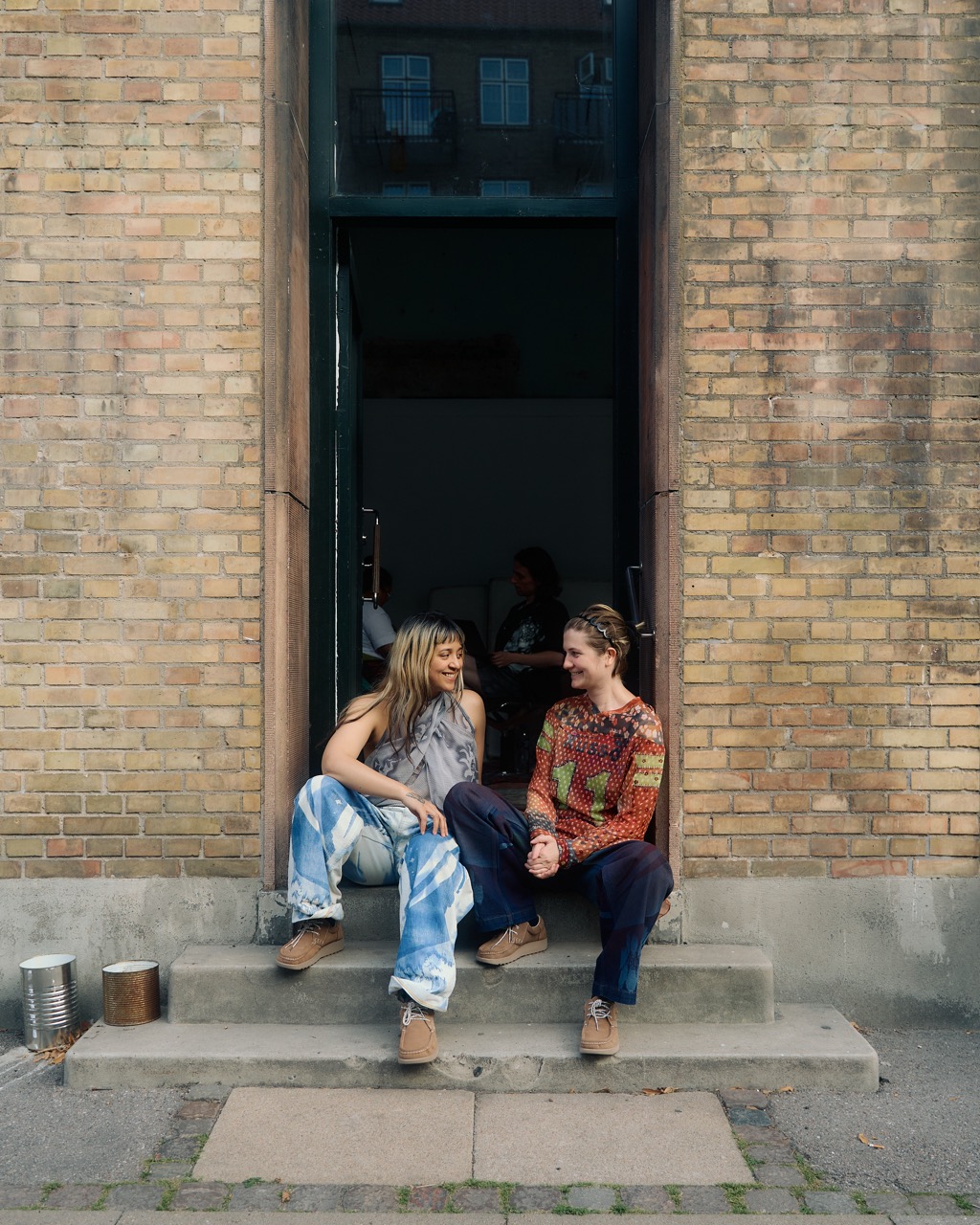


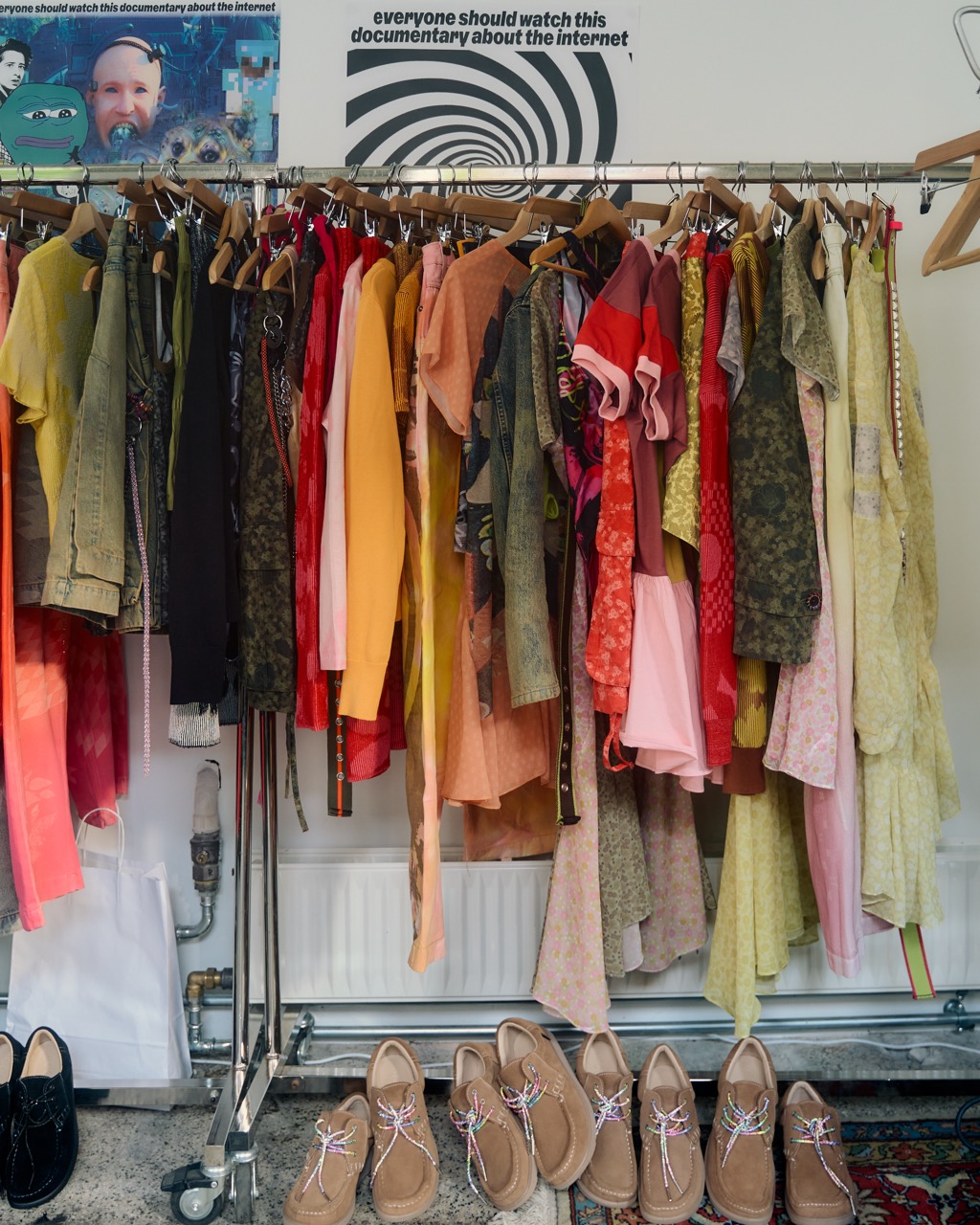
JP: You’re both creatives, but you’re also running a company together. Do you enjoy the business side?
LG: So much. It follows the same principles as designing: it’s problem-solving. There are a million problems every day and you just need to solve them.
PR: What I enjoy most is getting better at it. It’s so satisfying when everything starts to flow and you see the results in sales. The ecosystem flows, the business flows, and it becomes more effortless. What’s quite impressive is that it’s still just the two of us doing the business side, even though we were both trained as creatives.
JP: Have you had mentors helping you navigate that?
PR: We couldn’t have done it without our mentors. We were recently part of the Paul Smith residency in London, where we received mentorship on things like production, taxes and contracts.
JP: Do you find those business conversations difficult to navigate as young women?
LG: I think I would if we weren’t doing this together. Working collaboratively makes me stronger, so when those voices come, I don’t even listen to them.
PR: The difficult thing is that we’re both the creative side and the business side. One day you’re negotiating and the next you’re coming up with the ideas. It’s been really helpful to have additional ‘bosses’ within the team, like Lola Clabots, who handles our PR and understands exactly what we want.
LG: She made a massive difference for us. It’s hard to be the person following up on an invoice saying, ‘Excuse me, you’re 90 days late,’ and then show up the next day as the creative.
JP: Do you ever resent the amount of time that takes away from simply creating?
PR: I did in the beginning, because I didn’t fully understand how creative the business side could be. Once I started seeing the creativity in strategy and building momentum, it became extremely fun. If we were working creatively for six months straight, I don’t think it would feel as instinctual or fresh. Working in short bursts means you have to use your instincts and be very decisive. I feel very sure of my decisions now. I feel in control and powerful because of that. Sometimes we’ll make a schedule and say, ‘Okay, this is the week we design knits.’ For five days, I might not actually do anything. The ideas are gestating, and then everything comes out in the last two days because I needed that time to think.
JP: Do you have rituals that help when you feel creatively stuck?
LG: I don’t know, I find creativity quite logical. When I start a creative task, I first try to understand the process: the materials, the methods and how they can be developed into different things. I guess that’s what school taught us.
PR: And because the brand has existed for five years now, there’s a real context around it. We can place new ideas within something we’ve already built — specific concepts, stories and categories.
JP: How does having that established language change the way you design now?
PR: This season, for example, we wanted to develop a straight-leg jean. We’ve always done baggy jeans, but we wanted a little less fabric around our legs. So we used the existing context of the brand to figure out what a Paolina Russo straight jean should be: still a little loose and slightly off the body. I can really see the difference now. In the beginning, without that context, we would circle around ideas for so long. Now every season is more efficient. There’s already so much emotion in the brand’s story that we don’t need to rely on emotion to physically create the clothes. What we need is structure.
LG: We approached this season very efficiently. There was no last-minute rush; everything was organised. It has felt effortless for a few seasons now because we start on time and follow a specific method. We look at bestsellers and develop them. It becomes almost like a manufacturing project: Who do we want to work with? What can we improve in terms of price, materials or sustainability? The business side was something we knew nothing about because we trained as creatives. I never want to stop learning, and teaching ourselves every day is really enriching for me.
JP: Beneath all that evolution, what remains unmistakably Paolina Russo from one collection to the next?
LG: We’re always looking for a feeling and a sense of belonging. The clothes we make are a uniform for belonging. Growing up in small towns — the suburbs of Toronto and the countryside in France — where there’s nothing to do, you do arts and crafts. And with arts and crafts comes community.
PR: I see craft as a tool for bringing people together. Community and craft are always at the core of the inspiration. With that comes small-town nostalgia and prints that evoke a feeling of home.
LG: And there’s always a twist of sports. Growing up, you end up on local sports teams or playing video games as a way of connecting with people. So there’s always something homey and domestic twisted with sports codes.
JP: There’s a very particular Paolina Russo character. Who are you looking for when you cast?
PR: When we did our first show, we had never worked with a casting director before. The Paolina Russo character is close to this soft warrior princess, influenced by video games like The Legend of Zelda. Zelda’s a suburban warrior: tough, but also soft and elfish.
LG: We work with casting director Emma Mattel, who is a friend from school in London. She brings in all these different characters — local talents, musicians, performers, belly dancers, painters. Some people in the show she found at a medieval skater festival. She builds a community, and a lot of people come back each show and become part of the family.
JP: As the brand grows and you work with bigger companies, is it difficult to protect that sense of identity?
LG: It isn’t difficult because we mean it when we say yes. Thanks to Lola, we did a collaboration with Converse, and it felt effortlessly natural because we share values around nostalgia, local sports and community. It was a no-brainer — just fun and exciting.
PR: There are things we’ve said no to because they didn’t align with our values or the creative world of the brand. Sometimes it’s hard to say no, but the integrity of the brand and what we create is really important. We just want to be proud of what we do.
JP: Are there still dream collaborations you’re chasing?
LG: There’s one happening right now, but that one is secret! Roxy would be a dream. We’re trying and manifesting it. Actually, the very first time we met, we talked about Roxy. It isn’t happening at the moment, but fingers crossed. They’re so cool — women on surfboards, community. It’s incredible.
PR: What I love about Roxy is that it was a brand I grew up with. I remember going to the mall and begging my mum to buy me something from them. That was my idea of fashion growing up. It was so cool.
JP: And when nobody is working, what do you all do together?
PR: We play so many games. We’re like a game team because everyone is an older sister, so we love being competitive. We also do a lot of tarot — sometimes twice a day! It was my birthday recently and everyone came over, and we were reading each other’s cards. We read tarot in the studio a lot too. I actually have my cards here, so I might pull one right now. [Starts shuffling the deck and pulls a card.] Oh, that’s a good start. The Star! It’s funny, I actually pulled that exact card this morning. It’s The Star, and that’s what the collection is called: Lone Star.
JP: What do you think it means?
PR: The collection is about a girl who follows a lone star outside her window. She sneaks out at night to meet her skater and musician friends and go to a gig. It’s a journey of finding yourself. I see this card as a sign.
Photography by Bea Vanhala (@beavanhala)